
Poor labelling is one of the most common causes of wasted effort in home seed saving. Seeds placed into an unlabelled envelope quickly become unidentifiable — especially when a collection grows to twenty or thirty varieties over a few seasons. Clear, consistent labels also communicate information that is genuinely useful at planting time: the variety, the harvest year, and any notes from that season's growing performance.
What information to record
A useful seed label contains at minimum:
- Common name — e.g. tomato, dwarf bean, dill
- Variety name — e.g. Malinowy Krakowski, Borlotti, Lucullus
- Harvest year — the year the seeds were collected, not planted
- Number of seeds (optional but helpful for planning)
Beyond this minimum, additional details become useful if the collection grows:
- Parent plant notes — e.g. "from largest specimen", "late-ripening fruit"
- Approximate viability — e.g. "use by 2028" based on known storage life
- Source — e.g. "from działka in Wrocław", "from seed library"
- Isolation notes — relevant for cross-pollinating vegetables like courgettes
Heritage varieties: Polish heritage tomato varieties such as Malinowy Krakowski or Bawole Serce are frequently passed between gardeners without commercial availability. Consistent labelling is especially important for these, as variety identity can be lost within a single season of poor record-keeping.
Choosing the right labelling materials
The key requirement is that the label remains legible for the storage period — which can be two to five years for many vegetable seeds. Several practical problems arise with certain materials:
| Material | Durability | Notes |
|---|---|---|
| Ballpoint pen on paper envelope | 3–5 years | Reliable under dry storage. Avoid felt-tip — bleeds with moisture. |
| Pencil on paper | 5+ years | Most durable option. Does not smear or fade under dry conditions. |
| Permanent marker on paper | 2–3 years | Can fade. More useful on plastic zip-lock bags. |
| Printed label (inkjet) | 1–2 years | Fades rapidly if exposed to light or slight moisture. |
| Printed label (laser) | 5+ years | Durable. Good for long-term archive labelling. |
For most home collections, a soft pencil on a paper envelope is the most practical combination. It is cheap, always available, and remains legible for as long as the seed remains viable.
Envelope types for seed storage
Commercial seed packets use glassine envelopes — a semi-transparent, greaseproof paper that resists moisture transfer while remaining breathable. For home use, simple small paper envelopes are acceptable, though with some caveats:
- Paper envelopes alone are only suitable if the seeds will be kept in a closed container that controls humidity. Paper breathes, so seeds in unsealed envelopes inside a humid drawer will absorb ambient moisture.
- Glassine envelopes can be purchased from craft or stationery suppliers in Poland (search for: koperty pergaminowe). They offer better moisture resistance without sealing completely.
- Self-sealing zip-lock bags (small, food-safe) provide good moisture barriers for dry seeds. They are less traditional but practical for small quantities.
Folded paper squares — the origami-style seed envelope — are a common home alternative. A rectangle of paper folded into a small packet and secured with a fold-over tab works well and can be labelled on the outside before seeds are added.
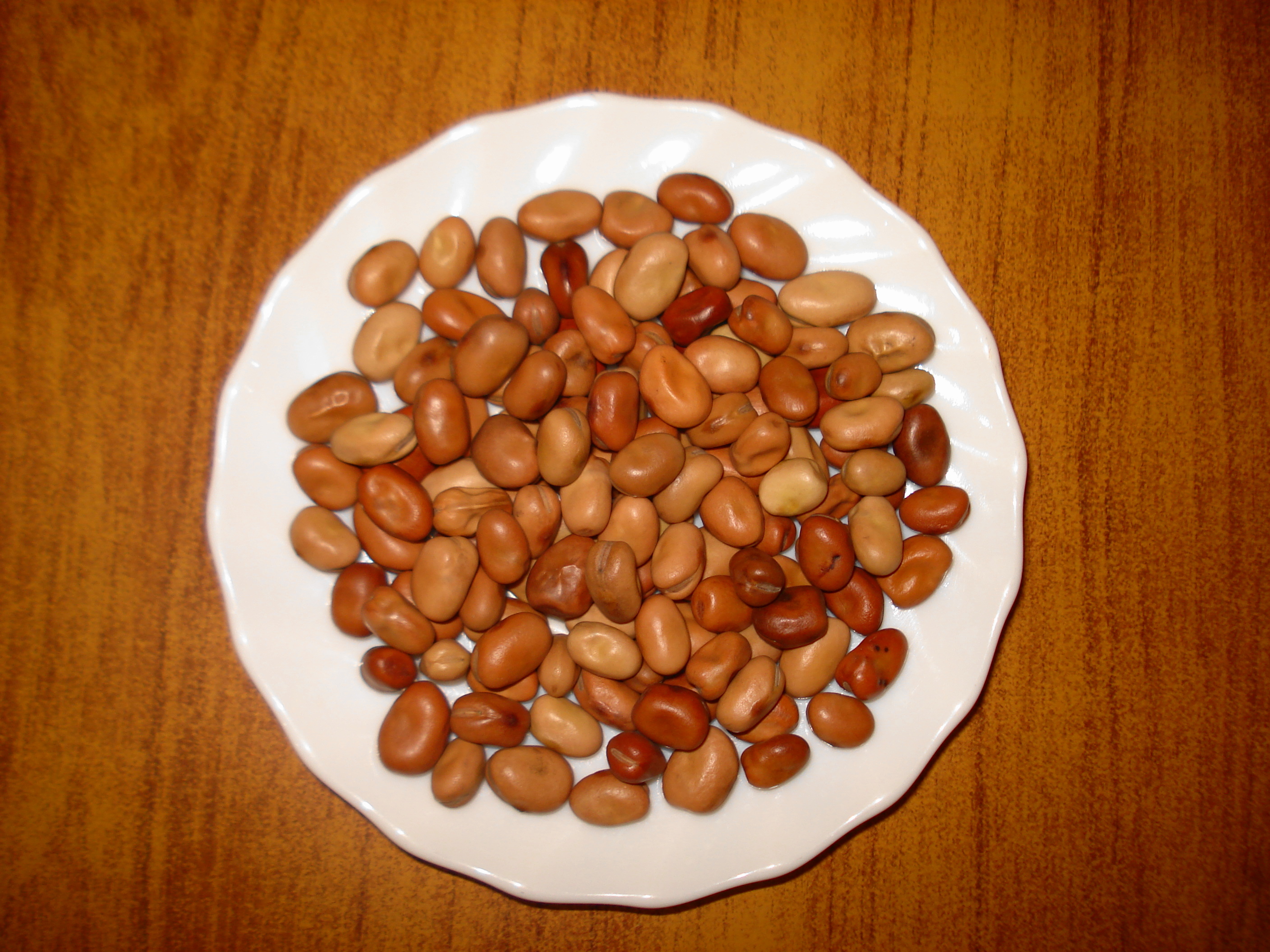
Dried fava beans. Without labels, different cultivars become indistinguishable. Source: Wikimedia Commons (CC BY-SA 3.0)
Setting up a physical filing system
A small collection of ten to twenty envelopes can be managed in a single box or tin. Larger collections benefit from a more deliberate structure. Common approaches used by experienced home seed savers:
Alphabetical by common name
Simple and quick to use. Works well when the collection is mostly distinct vegetable types rather than multiple varieties of the same vegetable. A small index card box with alphabetic dividers is sufficient.
Organised by plant family
Groups related plants together: Solanaceae (tomatoes, peppers, aubergines), Cucurbitaceae (cucumbers, courgettes, squash), Leguminosae (beans, peas), Apiaceae (dill, carrot, parsley, fennel). Useful for gardeners who rotate by family.
Organised by use-by year
Filing envelopes by the year they should be used by — based on known viability — ensures older seeds are used first. This works best as a secondary organisation within one of the above systems.
Keeping a seed register
A written register — even a simple notebook — adds value that envelope labels alone cannot provide. Useful entries include:
- Date collected and from which plant in the garden
- Germination test results (date tested, percentage that sprouted)
- Notes on variety performance that season
- Whether seeds were obtained from a single plant (potential inbreeding over multiple generations) or multiple plants
Digital records — a spreadsheet or simple text file — offer the advantage of being searchable. For a household collection of heritage varieties, maintaining even a basic record of what is held and when it was collected prevents loss of variety identity.
Germination testing before planting
Rather than discovering low germination rates at planting time, testing a small sample in late winter is useful. Place ten seeds on a damp paper towel, fold it over, keep it at room temperature and check after the expected germination period for that species. If fewer than half germinate, the batch should be sown more densely or replaced.
This test also allows the viability date on the label to be updated before the seeds are planted out.
References: Deppe, C. (2000). Breed Your Own Vegetable Varieties. Chelsea Green Publishing. — Covers seed saving and variety selection for home growers.